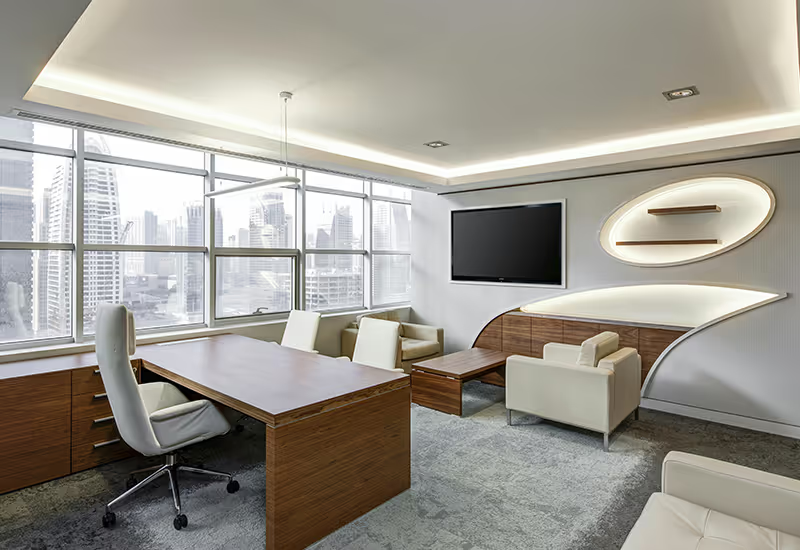
Perfect for statement pieces such as dining tables, headboards, and shelving. Its natural elegance adds sophistication to both modern and traditional designs.
A wooden wardrobe should do more than look stylish. It must support daily routines, protect clothing, and remain stable for years without alignment issues. Many homeowners pick a shutter design first and decide storage later. This often leads to unused sections and cluttered shelves. A better approach is to start with a storage map based on your actual needs: hanging section, folded clothes, drawers, and top loft.
For compact bedrooms, sliding wardrobes save door swing space, but track quality must be high to avoid frequent service problems. Hinged shutters are easier to maintain and usually more budget-friendly. If your room is medium or large, hinged wardrobes with internal organizers provide better long-term convenience.
Internal depth and shelf spacing are critical. Too much depth makes access difficult; too little depth creates folding issues. A balanced layout with adjustable shelves helps the wardrobe stay useful as family needs change over time.
Material choice directly affects life span. For humid environments, BWP or marine-grade plywood is safer than low-density boards. MDF can offer smooth painted finishes, but edge protection becomes very important. Veneer-over-plywood gives a premium wooden appearance with better dimensional stability than large solid wood shutters.
Check board thickness, internal support framing, and base protection before fabrication starts. Wardrobe bases should be slightly lifted from floor level using runners or legs to reduce moisture contact during cleaning. This simple detail significantly improves long-term performance.
Hardware quality should never be compromised. Hinges, channels, handles, and locks are high-usage components and often fail earlier than boards when low-grade fittings are used. Ask for hardware brand and warranty details in the quotation itself.
Color and finish influence both aesthetics and upkeep. Neutral shades like warm white, ash grey, and beige work well with most bedroom palettes and make rooms feel larger. Wooden textures in walnut and teak tones add warmth and pair well with soft lighting. High-gloss finishes can look rich but require more regular cleaning; matte finishes are often more practical for everyday homes.
Laminates are durable and easy to clean, making them suitable for busy households. PU-painted wardrobes give better customization in color and sheen, but application quality must be high. Acrylic shutters provide premium gloss but show fingerprints quickly. Approve final shades only after checking samples in your room lighting.
Maintenance is straightforward: keep interiors dry, avoid overloading shelves, and clean tracks or hinges periodically. If doors begin to misalign, fix the issue early before it stresses the shutter edges. Small preventive actions can avoid expensive panel replacement later.
Many wardrobes fail due to poor site measurement. Always confirm wall level, ceiling slope, skirting projection, and electrical point positions. In apartments, also verify lift and staircase access so panels can be moved safely. These practical checks prevent on-site rework and timeline delays.
Another common problem is over-designing the exterior while neglecting internal utility. Prioritize usable storage first, then decorative patterns. A wardrobe that works daily will always feel better than one that is visually attractive but inconvenient.
If your budget allows, you can add selected advanced accessories that improve convenience without wasting space. Pull-out laundry baskets, internal mirrors, lockable drawers, and modular dividers are useful for organized families. However, accessories should be chosen based on actual routine, not trend alone.
Lighting is another high-value upgrade. Sensor LED strips inside hanging sections and drawers improve visibility in low-light bedrooms. Choose warm neutral lighting for a premium look and ensure wire routes are planned before panel production. Retrofitting lights later is usually less clean and more expensive.
For shared wardrobes, assign dedicated sections and standard shelf heights to reduce daily confusion. Label loft boxes and maintain a simple arrangement system so items are easy to find. A wardrobe that is easy to use every day stays organized longer and preserves the quality of shutters and hardware.
Schedule a first service check after three to six months to adjust hinges and tracks once the wardrobe has settled. Clean channels regularly, avoid hanging wet clothes inside, and avoid slamming shutters. Preventive care extends hardware life and keeps alignment intact for years.
Keep a small maintenance checklist near your wardrobe area: inspect hinges monthly, clean tracks, and rotate seasonal clothes so load distribution stays balanced. If one section is overloaded continuously, shelves may bend over time. A quick quarterly review of internal organization helps preserve structural quality and keeps daily access smooth. Simple routines like these are often enough to keep wardrobes performing like new even after years of regular family use.
Before handover, inspect shutter alignment, lock movement, drawer smoothness, and edge finishing. Ensure ventilation and lighting work correctly inside the unit. A well-planned wooden wardrobe not only improves bedroom appearance but also gives reliable storage performance for many years.